
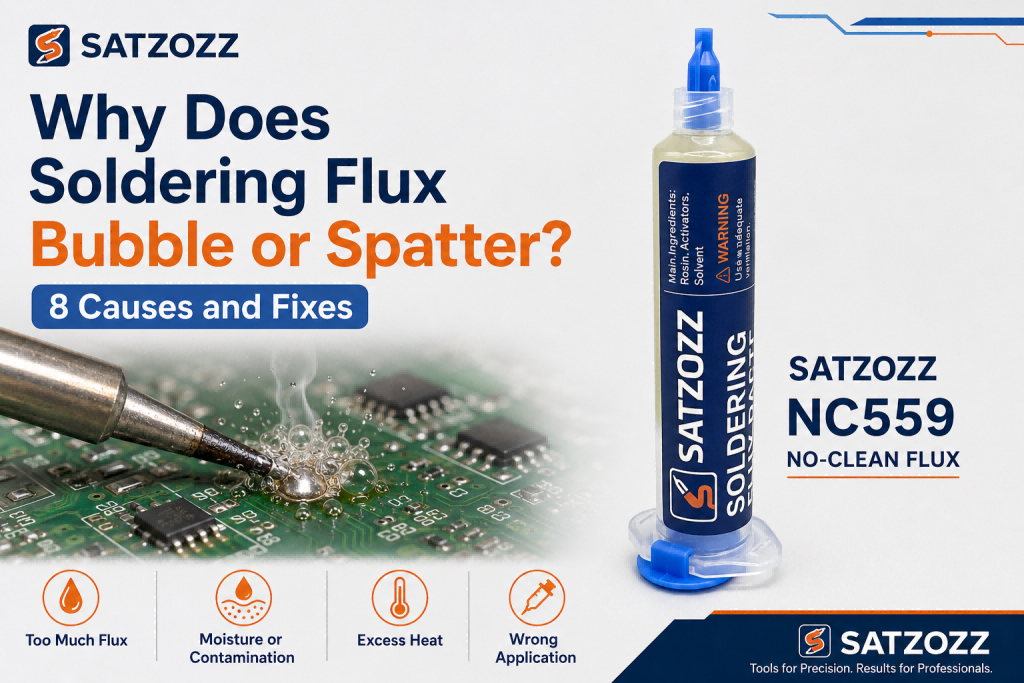
Why Does Soldering Flux Bubble or Spatter? 8 Causes and Fixes
Learn why soldering flux bubbles, pops or spatters during PCB repair. Fix excess flux, rapid heating, moisture, dirty surfaces and temperature problems.

Learn why soldering flux bubbles, pops or spatters during PCB repair. Fix excess flux, rapid heating, moisture, dirty surfaces and temperature problems.
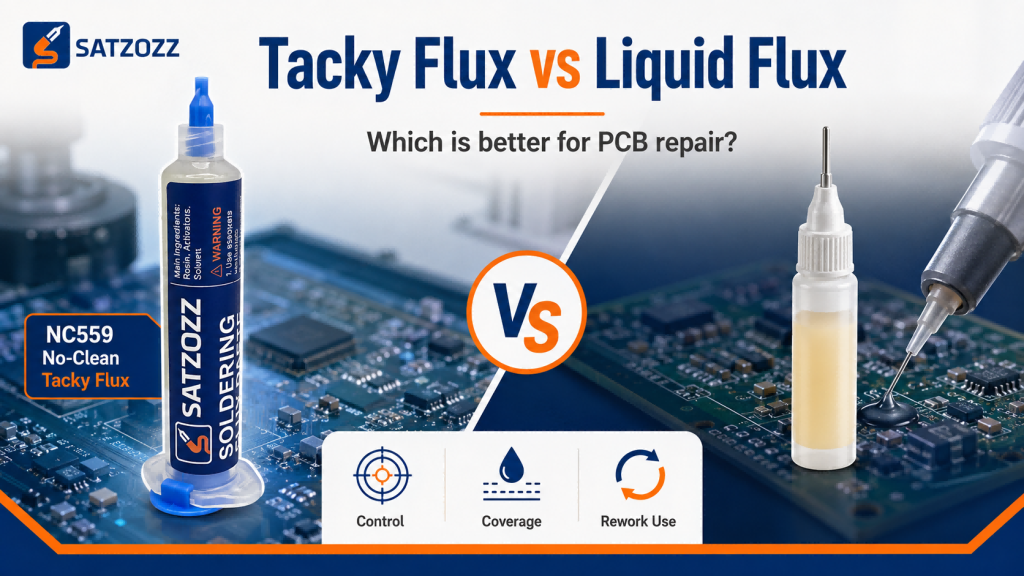
Compare tacky flux and liquid flux for PCB repair, SMD soldering, hot-air rework, drag soldering and desoldering. Learn which type offers better control.
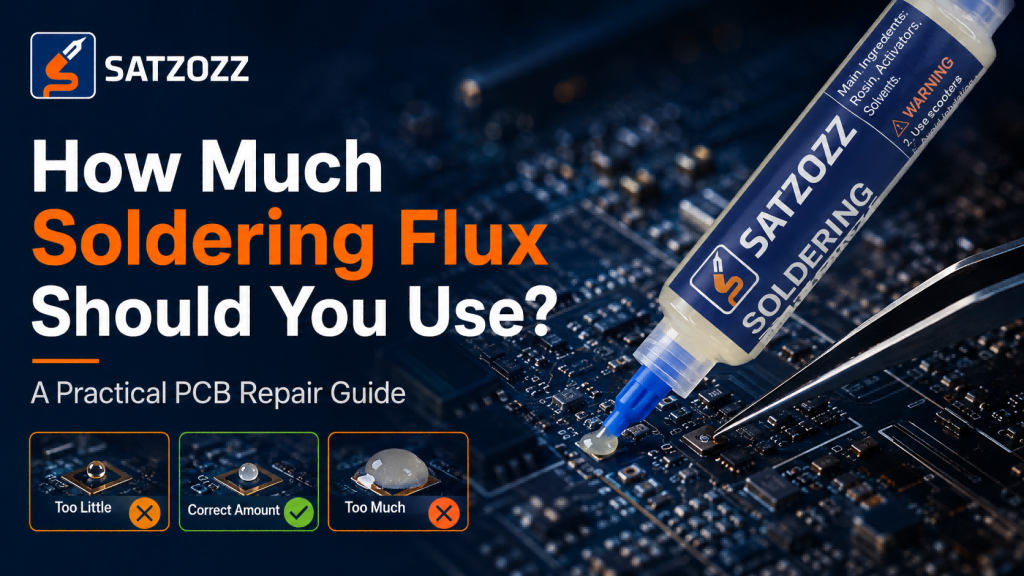
Learn how much soldering flux to use for PCB repair, SMD rework, drag soldering and desoldering without causing excessive residue or contamination.
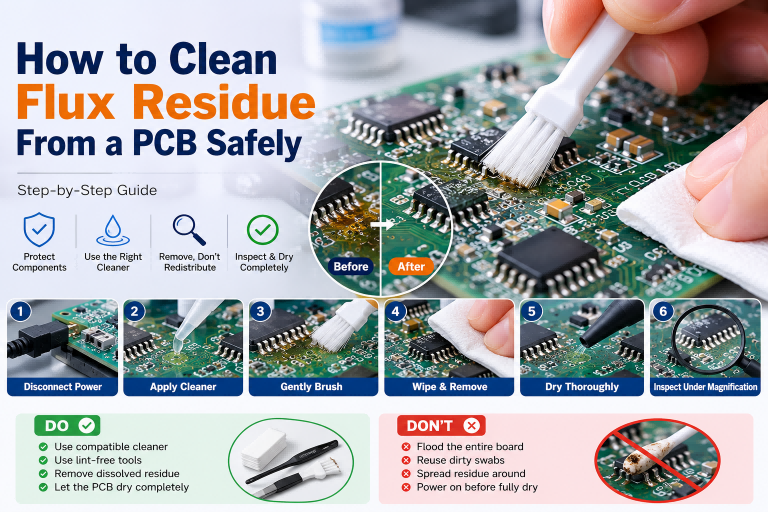
Learn how to clean flux residue from a PCB safely. Compare flux removers and IPA, avoid white residue, and protect components during PCB cleaning.
Learn why soldering flux turns brown, dark or sticky during PCB repair, when flux residue is normal, when to clean it and how to prevent excessive residue.
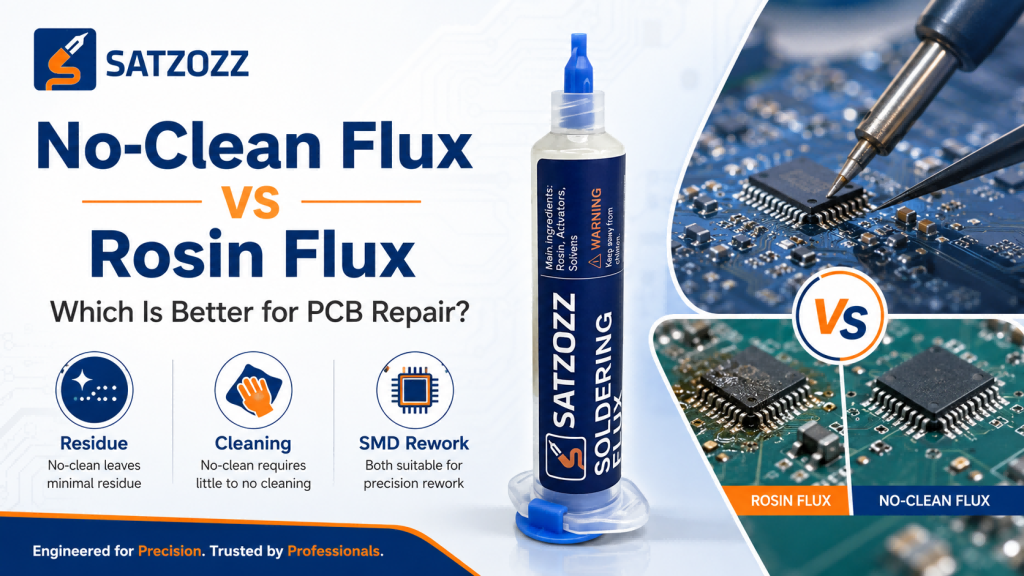
Compare no-clean flux and rosin flux for PCB repair. Learn about residue, cleaning, soldering performance, SMD rework and desoldering applications.

Learn when to use flux with desoldering wick, how flux improves solder absorption, how much to apply and which flux is suitable for PCB repair.
Compare desoldering wick and solder suckers for PCB repair. Learn which tool is better for SMD pads, solder bridges, through-holes and component removal.
PCB Repair Guide How