
What Is Soldering Flux?
How to Use Flux for PCB Repair and Microsoldering
Learn how soldering flux improves solder flow, prevents oxidation, and helps technicians achieve better PCB repair results.
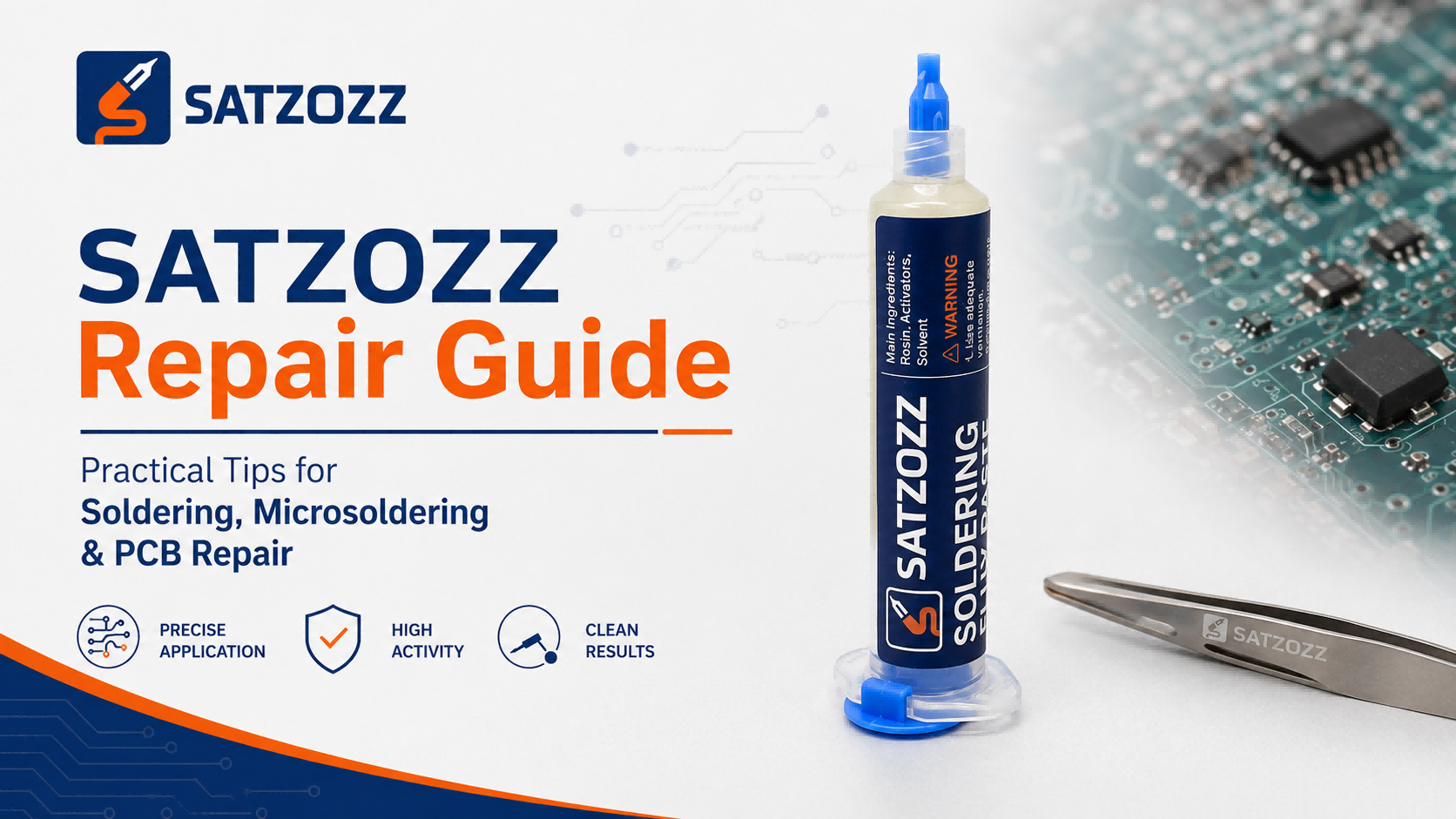
What Is Soldering Flux?
Soldering flux is a chemical material used during electronics soldering to remove oxidation and improve the bonding between solder and metal surfaces.
For PCB repair and microsoldering, flux helps solder flow smoothly and creates stronger and more reliable solder joints.
Professional technicians often use flux together with desoldering wick and precision tools for accurate repair work.
Main Functions of Flux
- Remove oxidation from PCB pads
- Improve solder wetting performance
- Reduce solder defects
- Improve repair efficiency
Why Is Flux Important for PCB Repair?
Better Solder Flow
Flux reduces surface tension and allows solder to spread evenly across PCB pads.
Cleaner Solder Joints
Helps create stronger connections with fewer soldering defects.
Microsoldering Control
Essential for fine pitch IC, SMD components and motherboard repair.

Common Applications of Soldering Flux
- PCB component replacement
- SMD and SMT repair
- Removing solder bridges
- Mobile phone motherboard repair
- Microsoldering work
How to Use Flux During PCB Soldering
Apply Flux
Apply a small amount of flux paste to the repair area.
Heat The Joint
Heat the solder area with a controlled temperature soldering iron.
Inspect Result
Check solder quality under microscope and clean residue if necessary.
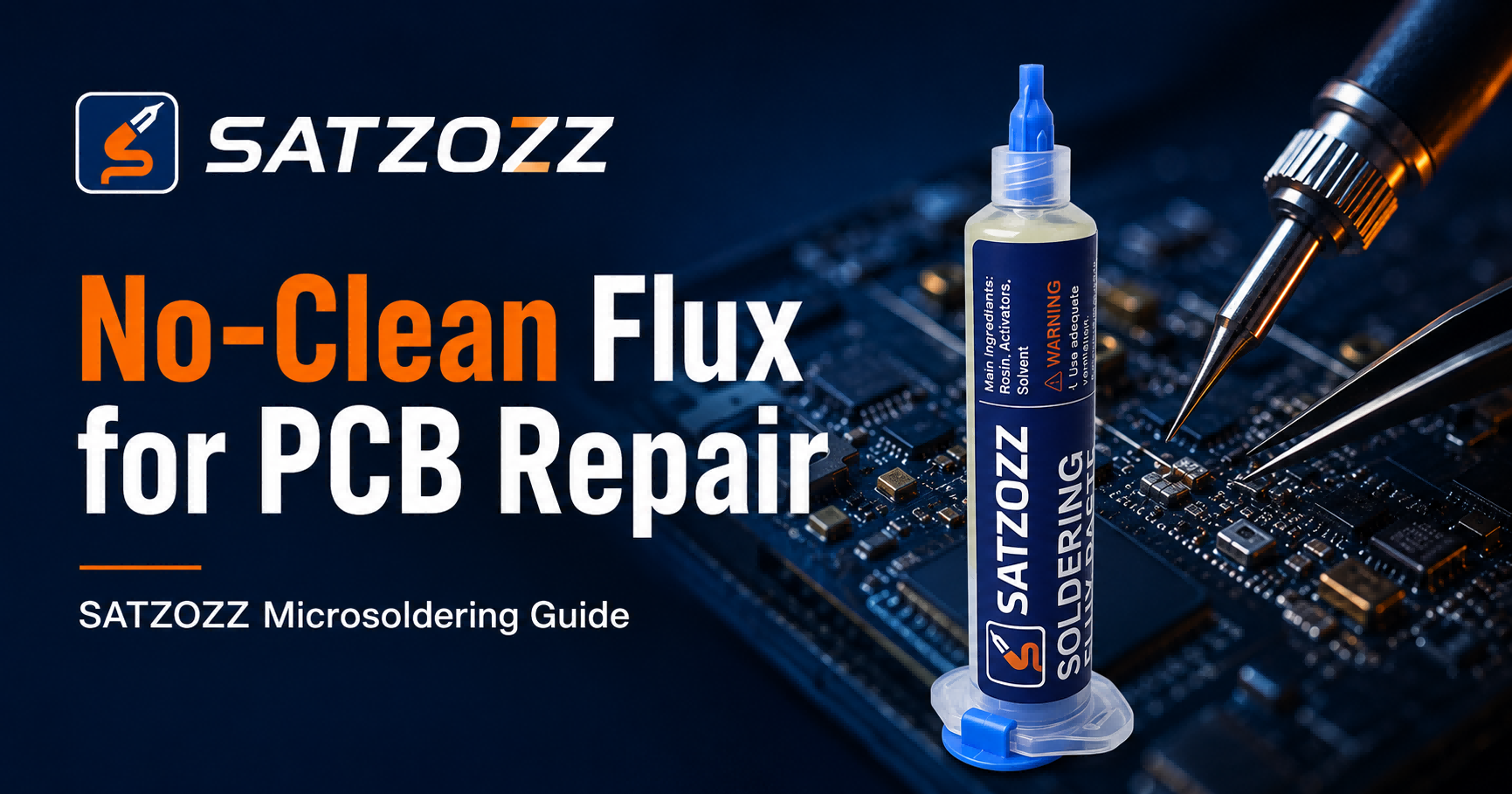
SATZOZZ NC559 Flux Paste for Electronics Repair
SATZOZZ NC559 soldering flux paste is designed for PCB repair, microsoldering and SMD component maintenance.
Its stable paste consistency allows precise application and helps technicians achieve consistent soldering results.
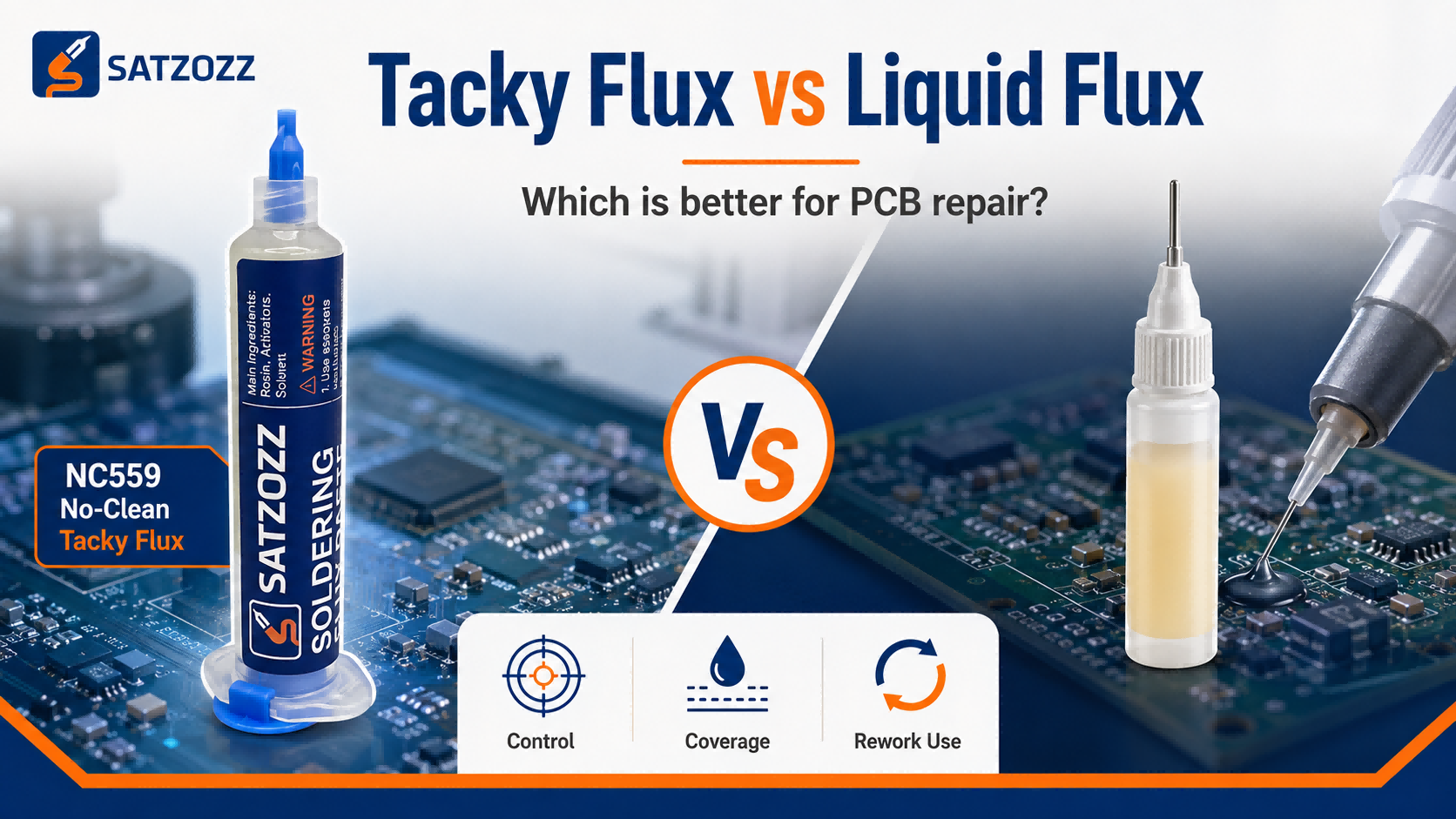
NC559 Flux Paste Features
- High activity soldering performance
- Excellent solder spreading ability
- Suitable for PCB repair applications
- Convenient syringe packaging
- Professional electronics repair solution
View product details: SATZOZZ NC559 Flux Paste
Flux vs No Flux: What Is The Difference?
| With Flux | Without Flux |
|---|---|
| Better solder flow | Poor solder wetting |
| Cleaner solder joints | More solder defects |
| Better for microsoldering | Harder precision control |
Recommended PCB Repair Tools
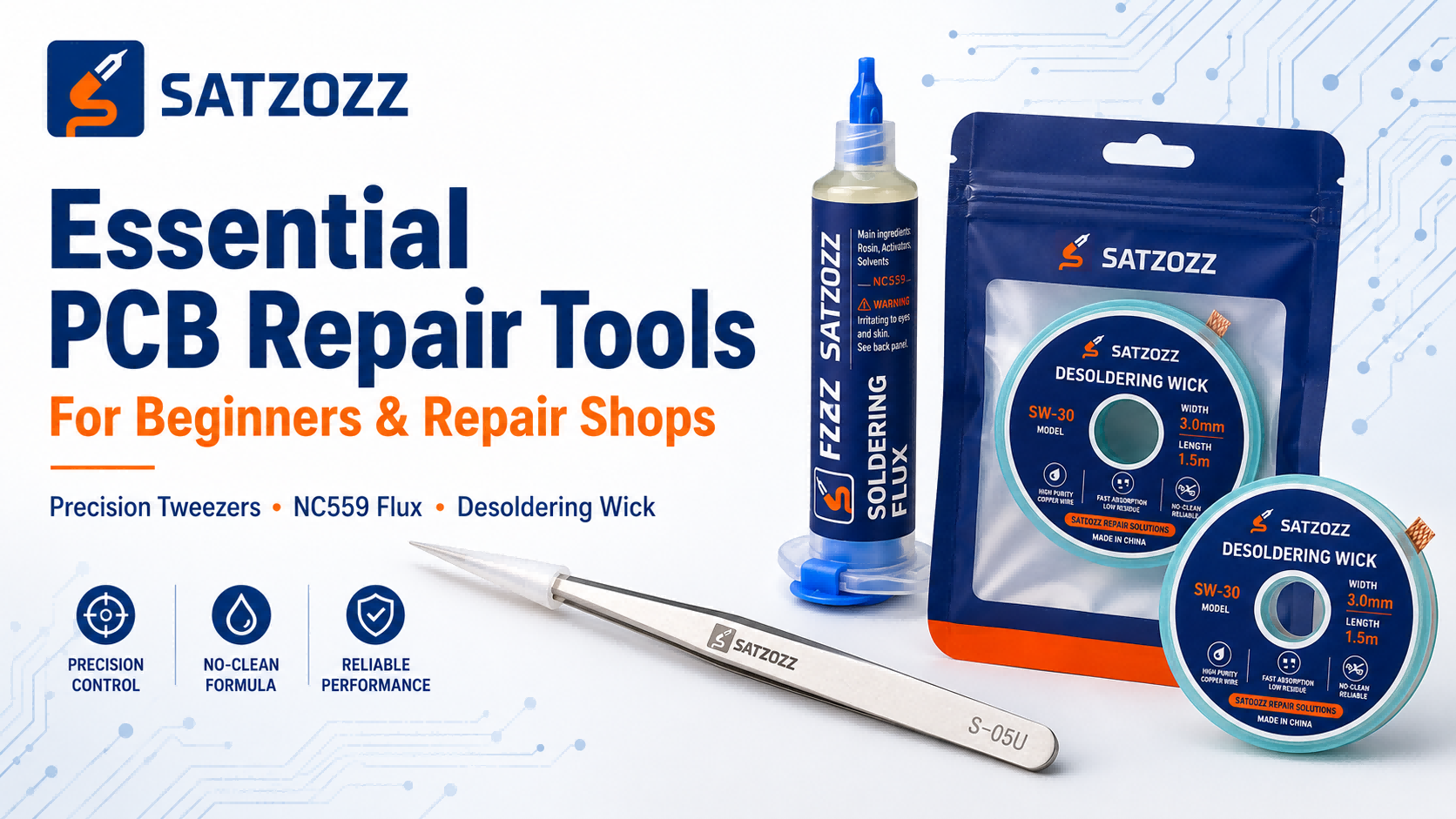
Professional PCB repair usually requires multiple tools. Besides flux paste, technicians also use:
- Desoldering Wick for solder removal.
- Precision Tweezers for handling small components.
Related PCB Repair Guides
Frequently Asked Questions
Is flux necessary for PCB repair?
Yes. Flux improves solder flow and helps create stronger solder joints.
Can flux help desoldering?
Yes. Flux improves solder melting and helps desoldering wick absorb solder more effectively.
What flux is suitable for microsoldering?
A stable flux paste with good activation performance is commonly preferred for precision PCB repair.
Conclusion
Flux is one of the most important materials in electronics repair. Combined with quality repair tools, it helps technicians achieve accurate, clean and reliable PCB soldering results.
SATZOZZ provides professional electronics repair consumables including NC559 flux paste, desoldering wick and precision tools.
Pingback: PCB Repair Tool Packaging for Distributors: Retail-Ready, Private Label & SKU Clarity - SATZOZZ Precision Microsoldering Tools