
Microsoldering Tips
“`
Desoldering Wick for PCB Repair: How to Choose and Use Solder Removal Braid
In PCB repair and electronics maintenance, removing solder cleanly is just as important as applying solder correctly. Whether you are fixing solder bridges, cleaning PCB pads, or preparing components for replacement, a reliable desoldering wick can make the repair process faster, cleaner, and more controlled. SATZOZZ Desoldering Wick is designed for PCB repair, electronics maintenance, component rework and solder bridge removal. It is available in multiple widths from 1.0mm to 3.0mm, helping repair technicians choose the right solder removal braid for different repair jobs. “`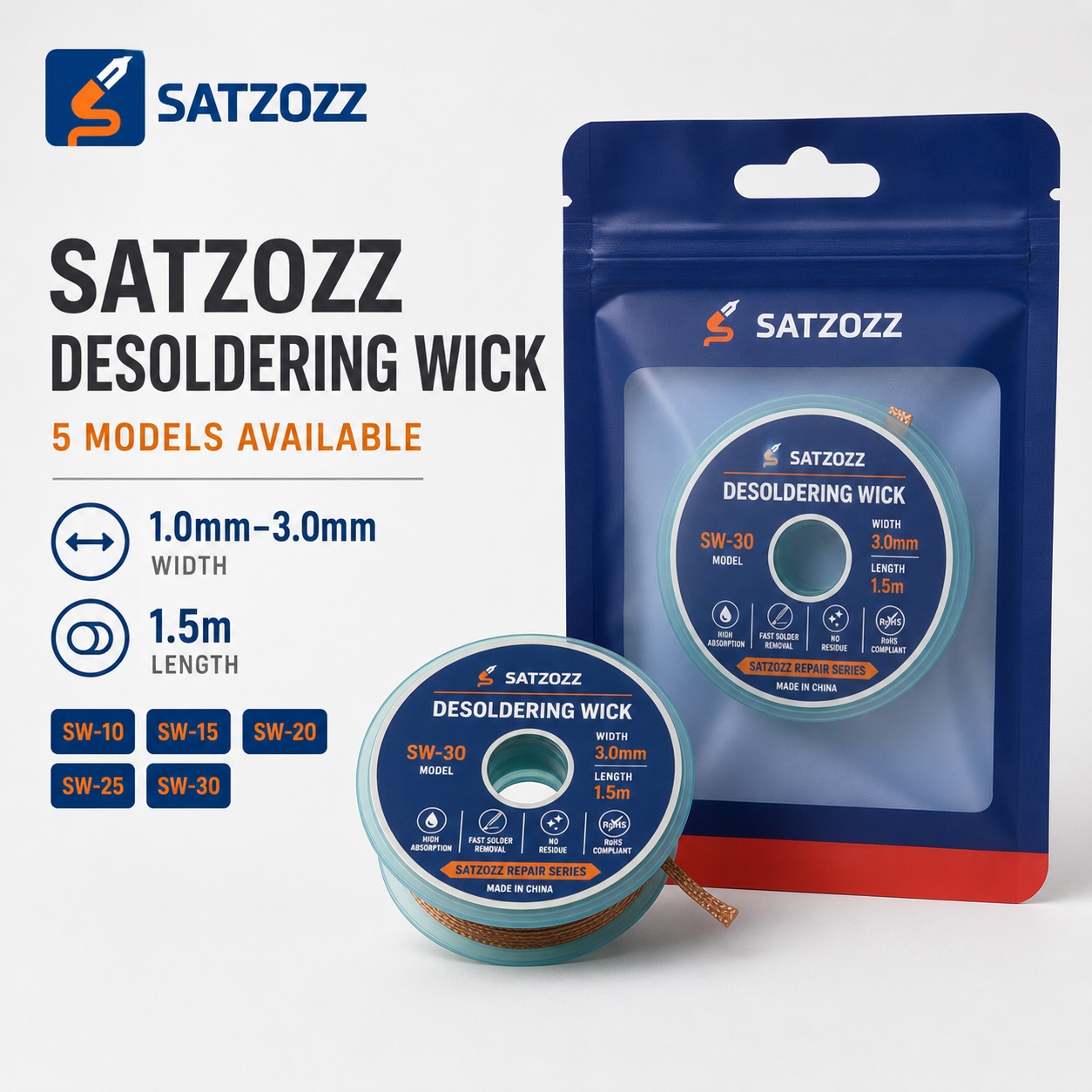
SATZOZZ Desoldering Wick is available in SW-10, SW-15, SW-20, SW-25 and SW-30 widths for different PCB repair and solder removal tasks.
Quick answer: Desoldering wick, also called solder removal braid, is a braided copper tool used to absorb molten solder from PCB pads, solder joints and solder bridges. For small pads and SMD repair, use narrow wick such as 1.0mm or 1.5mm. For larger joints, use 2.5mm or 3.0mm.
What Is Desoldering Wick?
Desoldering wick is a braided copper wire used to remove molten solder from a circuit board. It is also commonly called solder removal braid, desoldering braid, or solder wick. When the wick is placed on a solder joint and heated with a soldering iron, the copper braid absorbs molten solder through capillary action. This makes it useful for removing extra solder without damaging the board surface.People Also Ask About Desoldering Wick
What is desoldering wick used for?
Desoldering wick is used to remove excess solder from PCB pads, through-hole joints, solder bridges and component leads. It is commonly used in PCB repair, electronics maintenance, soldering rework and component replacement.Is desoldering wick better than a solder sucker?
Desoldering wick and solder suckers are used for different tasks. A solder sucker removes larger amounts of molten solder by suction, while desoldering wick is better for cleaning pads, removing fine solder bridges and controlling solder removal in detailed PCB repair.How do I choose the right desoldering wick size?
Choose the wick width based on the solder joint size. For small pads and fine SMD repair, use 1.0mm or 1.5mm. For general PCB repair, use 2.0mm. For larger pads and heavier solder joints, use 2.5mm or 3.0mm.Can desoldering wick remove solder bridges?
Yes. Desoldering wick is effective for solder bridge removal. Place the braid over the solder bridge, heat it with a soldering iron, and allow the copper braid to absorb the excess solder.What desoldering wick size is best for PCB repair?
For most general PCB repair work, 2.0mm is a practical choice. For small SMD components and delicate pads, 1.0mm or 1.5mm may provide better control. For larger solder joints, 2.5mm or 3.0mm can remove solder more efficiently.Why Desoldering Wick Matters in PCB Repair
Too much solder can cause short circuits, unstable connections and poor repair results. In fine electronics repair, especially near small pads and SMD components, excessive force or overheating may damage the board. A quality solder wick for PCB repair helps technicians remove solder with better control. Instead of scraping the board or overheating the same area repeatedly, repair technicians can use solder removal braid to absorb solder efficiently and keep the repair area cleaner.Key Features of SATZOZZ Desoldering Wick
1. High Absorption Braided Copper Wick
SATZOZZ desoldering wick uses a braided copper structure designed to absorb molten solder efficiently. It is suitable for solder removal, solder bridge repair, pad cleaning and component rework.2. Multiple Widths for Different Repair Jobs
Different repair tasks require different wick widths. A narrow wick is better for small pads, while a wider wick is more suitable for larger solder joints. SATZOZZ offers five width options:- SW-10 — 1.0mm width for ultra-fine work and small pads
- SW-15 — 1.5mm width for fine SMD repair
- SW-20 — 2.0mm width for general PCB repair
- SW-25 — 2.5mm width for medium solder joints
- SW-30 — 3.0mm width for larger solder joints and stronger solder removal
3. Low Residue for Cleaner Repair Work
Clean repair work is important for electronics maintenance. SATZOZZ solder removal braid is designed to support cleaner solder removal and make the repaired board easier to inspect after rework.4. Retail Pouch Packaging
SATZOZZ desoldering wick comes with retail pouch packaging, making it suitable for repair tool stores, online sellers, distributors and repair shops. The packaging is easy to display, store and ship.How to Use Desoldering Wick for PCB Repair
Step 1: Place the Wick on the Solder Joint
Place the desoldering wick directly on the solder joint or solder bridge you want to remove. Choose a wick width that matches the size of the repair area.Step 2: Apply Heat with a Soldering Iron
Put the soldering iron tip on top of the wick. Heat transfers through the copper braid and melts the solder underneath.Step 3: Let the Braid Absorb the Solder
Once the solder melts, the braided copper wick absorbs it. Do not drag the wick aggressively across the board. Let the braid absorb the solder naturally.Step 4: Remove and Cut the Used Section
After the solder is absorbed, lift the soldering iron and wick away together. Cut off the used section and continue with a clean section if needed.How to Choose the Right Desoldering Wick Width
Choosing the right width improves efficiency and reduces unnecessary heat exposure. The table below shows a simple selection guide.| Model | Width | Length | Recommended Use |
|---|---|---|---|
| SW-10 | 1.0mm | 1.5m | Ultra-fine work, small pads and delicate repair |
| SW-15 | 1.5mm | 1.5m | Fine SMD repair and small solder joints |
| SW-20 | 2.0mm | 1.5m | General PCB repair and electronics maintenance |
| SW-25 | 2.5mm | 1.5m | Medium solder joints and larger pads |
| SW-30 | 3.0mm | 1.5m | Large solder joints and stronger solder removal |
Common Applications
SATZOZZ solder removal braid is suitable for a wide range of repair and maintenance tasks:- PCB repair and rework
- Solder bridge removal
- Electronics maintenance
- DIY soldering projects
- Component replacement preparation
- Repair shop daily solder removal work
Pingback: How to Price PCB Repair Tools for Resale: Margin, Markup, Freight & Bundle Strategy - SATZOZZ Precision Microsoldering Tools