
Why Is My Desoldering Wick Not Absorbing Solder? 8 Causes and Fixes
If your solder wick is not pulling solder away from a PCB pad, the problem is usually caused by poor heat transfer, oxidation, incorrect braid width, insufficient flux or improper contact with the solder joint.
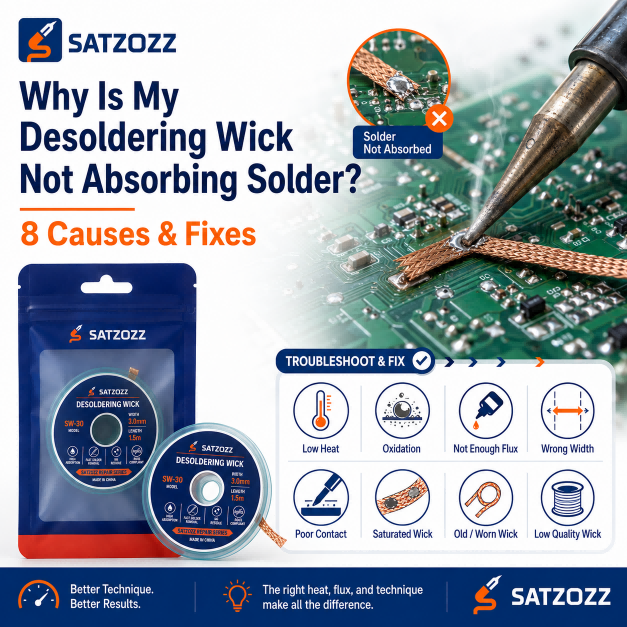
Quick answer: Desoldering wick may fail to absorb solder when the iron tip is dirty, the joint is not hot enough, the braid is too wide, the wick is already saturated, the solder is oxidized, there is not enough flux, the braid is positioned incorrectly or the joint has high thermal mass.
- Clean and tin the soldering iron tip.
- Use a fresh section of copper braid.
- Match the wick width to the solder joint.
- Apply a small amount of electronics-grade flux when necessary.
- Use a tip with enough contact area to heat the braid efficiently.
Desoldering wick, also known as solder wick or desoldering braid, removes molten solder by drawing it into a braided copper structure through capillary action. When the wick, solder and iron tip reach the correct working condition, solder should flow visibly into the braid.
When that does not happen, many users continue holding the soldering iron on the PCB. This usually makes the problem worse and can increase the risk of overheated components, damaged solder masks or lifted PCB pads.
Instead of applying more pressure or heating for longer, stop and identify the cause. The following eight problems account for most cases where desoldering wick is not absorbing solder.
Two-Minute Diagnostic Check
- Is the soldering iron tip clean, shiny and properly tinned?
- Is the wick section fresh and free from previously absorbed solder?
- Does the braid width match the solder joint?
- Is the iron tip large enough to contact the braid properly?
- Does the solder melt before the PCB begins overheating?
- Is the braid positioned directly on the solder?
- Would a small amount of flux improve wetting?
- Is the joint connected to a large ground plane or metal terminal?
1. The Soldering Iron Tip Is Dirty or Oxidized
Poor Tip Condition Prevents Efficient Heat Transfer
A dark, dry or oxidized soldering iron tip does not transfer heat efficiently into the copper braid. Even if the iron is hot, the joint may not receive enough usable heat to melt the solder quickly.
Tip cleanliness is especially important when using wider desoldering braid. Wider copper wick requires more effective contact with the soldering iron tip.
2. The Joint Is Not Receiving Enough Heat
Insufficient Heat Keeps the Solder Solid
Desoldering wick can only absorb solder after the solder becomes fully molten. If the joint remains partially solid, the solder will not flow into the braid effectively.
3. The Wick Is Too Wide for the Iron Tip
The Iron Cannot Heat the Full Braid Area
A fine soldering iron tip may not transfer enough energy through a wide copper braid. The top of the wick may become warm while the solder below remains below its melting point.
| SATZOZZ Model | Wick Width | Typical Repair Use |
|---|---|---|
| SW-10 | 1.0 mm | Fine-pitch IC pins, small SMD pads and precision repair |
| SW-15 | 1.5 mm | Small solder bridges, compact pads and connector pins |
| SW-20 | 2.0 mm | General PCB repair and everyday component rework |
| SW-25 | 2.5 mm | Medium pads, through-hole joints and larger terminals |
| SW-30 | 3.0 mm | Large pads, power terminals and heavier solder deposits |
Read our complete desoldering wick width selection guide to compare all five available sizes.
4. The Wick Is Already Saturated With Solder
Used Braid Has Limited Absorption Capacity
Once the spaces inside the copper braid are filled with solder, that section cannot absorb much more. Reheating a saturated section only adds unnecessary heat to the PCB.
Do not attempt to reuse a section of wick simply because it still appears flat. Its internal copper structure may already be filled with solder.
5. The Solder Joint Is Oxidized or Contaminated
Oxidation Prevents Proper Solder Flow
Old solder joints, exposed PCB pads and overheated solder can develop oxidation. Oxidized solder may melt poorly, form irregular surfaces and resist flowing into the braid.
Although adding solder before removing solder may seem counterintuitive, fresh solder can help create a more uniform molten joint that is easier for the copper wick to absorb.
6. There Is Not Enough Flux
Insufficient Wetting Reduces Capillary Absorption
Flux helps remove surface oxides and allows molten solder to wet the copper braid. When the existing solder or wick surface does not wet properly, capillary action becomes less effective.
When Extra Flux Is Useful
- Older or oxidized solder joints
- Lead-free solder that is difficult to reflow
- Previously overheated repair areas
- Fine-pitch IC pads requiring cleaner solder flow
- Boards that have been stored in humid conditions
When to Use Flux Carefully
- Near connectors and switches
- Around sensors or sensitive assemblies
- On boards that cannot be cleaned easily
- When excessive residue could affect inspection
7. The Wick Is Not Making Proper Contact With the Solder
Poor Positioning Interrupts Heat and Solder Flow
The wick must contact the solder joint directly. If the braid sits beside the solder, rests unevenly on a component lead or bends away from the pad, the solder may melt without entering the copper braid.
Do not hold the wick above the joint and attempt to draw solder upward through an air gap. Copper braid requires direct thermal and physical contact with the molten solder.
8. The Joint Has High Thermal Mass
Large Copper Areas Pull Heat Away From the Joint
Ground planes, power terminals, shielding tabs, large connectors and multilayer PCB structures can absorb heat faster than the soldering iron supplies it.
For large through-hole joints, a solder sucker or powered desoldering tool may remove the bulk of the solder more efficiently. Desoldering wick can then clean the remaining solder from the pad.
How to Make Desoldering Wick Absorb Solder Better
Inspect the Joint
Check for oxidation, large copper planes, existing PCB damage and excessive solder volume.
Choose the Correct Wick Width
Use narrow braid for small pads and fine-pitch work. Use wider braid only when the joint size and iron tip can support it.
Clean and Tin the Iron Tip
Ensure the tip has a clean metallic surface and an even layer of solder for efficient thermal transfer.
Use a Fresh Section of Wick
Cut off any braid that has already absorbed solder.
Add Flux When Needed
Use a small controlled amount to improve wetting on oxidized or difficult solder joints.
Position the Wick Directly on the Joint
Keep the braid flat and centered over the solder that needs to be removed.
Apply the Iron With Light Pressure
Press only enough to establish thermal contact. Do not force the braid against the PCB.
Lift the Iron and Wick Together
Remove both while the solder remains molten. Never pull cold braid from a PCB pad.
Desoldering Wick Troubleshooting Table
| Problem | Likely Cause | Recommended Fix |
|---|---|---|
| Solder does not melt | Dirty tip, insufficient heat or poor tip contact | Clean and tin the tip; improve contact with the braid |
| Solder melts but remains on the pad | Oxidation, insufficient flux or poor wick contact | Add controlled flux and reposition the wick |
| Only a small amount of solder is absorbed | Wick is too narrow or already saturated | Use fresh braid or select a more suitable width |
| Wide braid heats very slowly | Iron tip is too small | Use a larger contact tip or narrower braid |
| Wick sticks to the PCB pad | Solder cooled before removal | Reheat gently and lift the iron and braid together |
| Large terminal will not desolder | High thermal mass | Use suitable thermal capacity or remove bulk solder first |
| PCB pad begins discoloring | Heating time is too long | Stop, allow cooling and correct the heat-transfer problem |
When Should You Use a Solder Sucker Instead?
Desoldering wick is excellent for cleaning flat PCB pads, removing solder bridges and controlling small amounts of solder. It may not always be the most efficient first tool for large through-hole joints.
| Repair Situation | Preferred Tool |
|---|---|
| Cleaning SMD pads before component installation | Desoldering wick |
| Removing a solder bridge between fine IC pins | Narrow desoldering wick |
| Removing a large amount of solder from a through-hole | Solder sucker or desoldering station |
| Cleaning residual solder after suction | Desoldering wick |
| Working around delicate, closely spaced pads | Precision desoldering wick |
How to Prevent PCB Damage During Troubleshooting
- Do not keep heating a joint that is not responding.
- Stop and clean the iron tip before increasing temperature.
- Never pull wick sideways across a PCB pad.
- Lift the iron and braid together while solder is molten.
- Allow the PCB to cool between repeated heating cycles.
- Use magnification when working around fine-pitch components.
- Trim saturated braid before continuing.
- Match the wick width and iron tip to the solder joint.
For a complete safety guide, read: How to Use Desoldering Wick Without Damaging PCB Pads .
Frequently Asked Questions
Why is my solder wick not absorbing solder?
The most common causes are a dirty soldering iron tip, insufficient heat, saturated braid, oxidized solder, insufficient flux, incorrect wick width or poor contact between the braid and solder joint.
Should I add flux to desoldering wick?
Additional flux can help when the solder is oxidized, old or difficult to wet. Apply only a small amount of electronics-grade flux to improve solder flow into the copper braid.
Why does the solder melt but not enter the wick?
The wick may not be touching the solder correctly, the solder surface may be oxidized or the braid may already be saturated. Reposition the wick, add flux if necessary and use a fresh section.
Can desoldering wick become too old to work?
Copper braid that has been exposed to moisture, contamination or oxidation may perform less effectively. Keep unused wick clean, dry and stored in its resealable packaging.
Does wider desoldering wick absorb more solder?
Wider wick has more absorption area, but it also requires more heat. It will not work efficiently if the soldering tip is too small or the joint does not provide sufficient thermal contact.
What is the best desoldering wick width for general PCB repair?
A 2.0 mm wick is a versatile general-purpose choice. Smaller pads may require 1.0 or 1.5 mm wick, while larger terminals may require 2.5 or 3.0 mm braid.
Why does desoldering wick stick to the PCB?
The solder has usually cooled and bonded the braid to the joint. Reheat it gently and lift the soldering iron and wick away together while the solder is molten.
Can I reuse solder-filled desoldering wick?
No. Once the braid is filled with solder, its absorption capacity is greatly reduced. Trim the used section and continue with fresh wick.
Choose the Right SATZOZZ Desoldering Wick
SATZOZZ Desoldering Wick is designed for PCB pad cleaning, solder bridge removal, component desoldering and electronics repair.
- SW-10: 1.0 mm
- SW-15: 1.5 mm
- SW-20: 2.0 mm
- SW-25: 2.5 mm
- SW-30: 3.0 mm
- 1.5 meters per roll
- Individual resealable retail pouch
- Single-model and mixed-width options
- Wholesale and private-label cooperation available
Need Reliable Desoldering Wick for PCB Repair?
Explore the complete SATZOZZ Desoldering Wick range or contact our team for wholesale, distributor and private-label inquiries.
View Desoldering Wick Contact SATZOZZ