
Best Tweezers for Microsoldering: How to Choose Precision Tweezers for PCB Repair
In microsoldering and PCB repair, precision tweezers are one of the most frequently used tools on the workbench. Whether you are handling tiny components, positioning wires, working around phone motherboard pads, or placing fine SMD parts, the right tweezers can make repair work more stable and controlled.
However, not every tweezer is suitable for microsoldering. For fine electronics repair, technicians need tweezers with a precise tip, stable grip, comfortable handling, and the ability to work in tight spaces.
In this guide, we explain how to choose the best tweezers for microsoldering, what features matter most, and why SATZOZZ S-05U Ultra-Fine Precision Tweezers are suitable for PCB repair, phone motherboard repair, and delicate electronics handling.
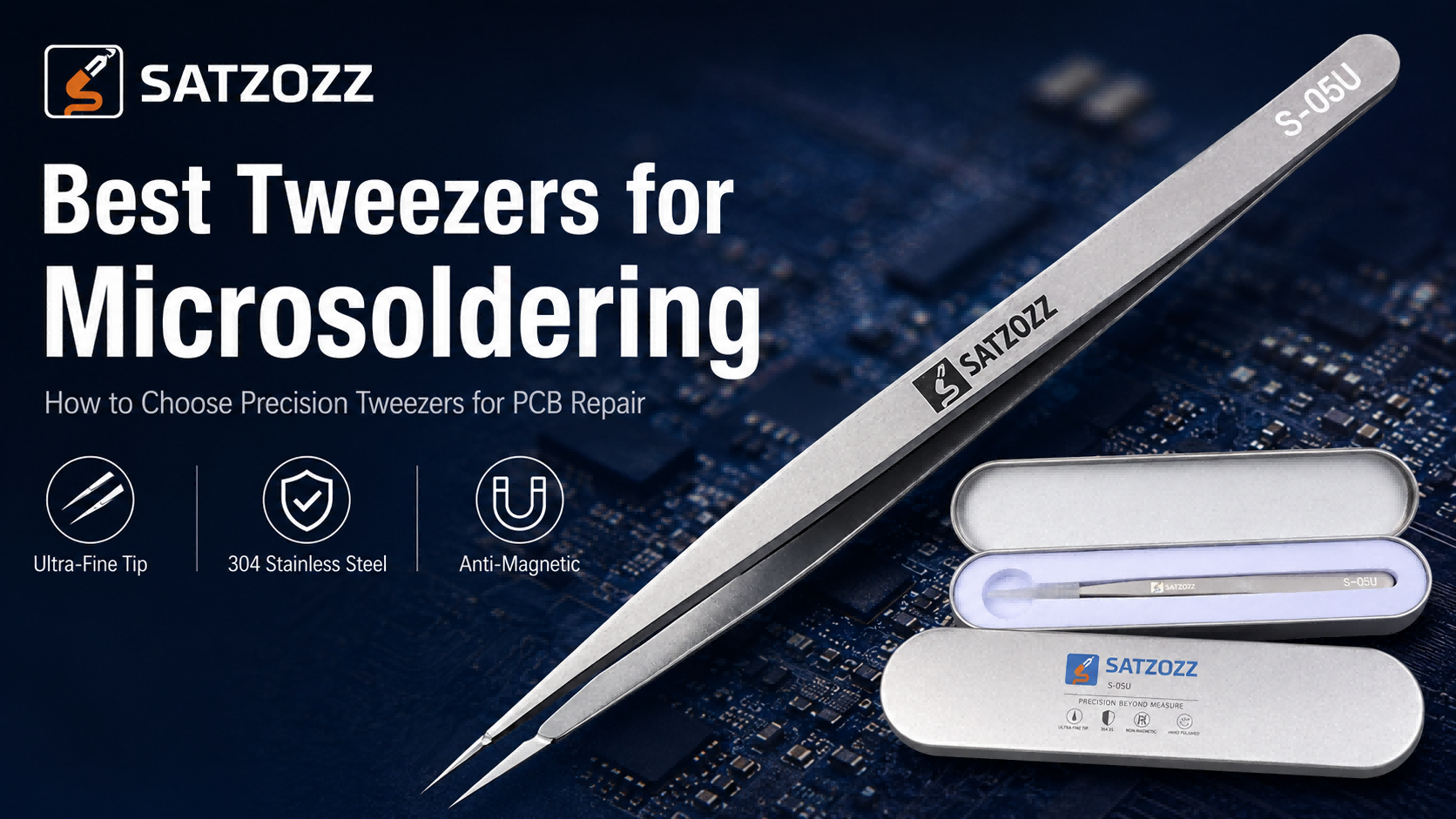
SATZOZZ S-05U Precision Tweezers feature an ultra-fine 0.08mm tip for microsoldering, PCB repair and delicate electronics work.
Quick answer: The best tweezers for microsoldering should have an ultra-fine tip, accurate alignment, stable grip, comfortable handling, and good control for small components. For phone motherboard repair and fine PCB work, 0.08mm ultra-fine tip tweezers such as SATZOZZ S-05U are a practical choice.
People Also Ask About Tweezers for Microsoldering
What tweezers are best for microsoldering?
The best tweezers for microsoldering are fine-tip precision tweezers that can handle small components accurately. They should offer stable grip, fine alignment and good control for PCB repair, phone motherboard repair and SMD component placement.
Why do microsoldering technicians need ultra-fine tweezers?
Microsoldering often involves tiny pads, small components and limited working space. Ultra-fine tweezers help technicians pick, position and adjust delicate parts with better control.
Are straight tweezers good for PCB repair?
Straight tweezers are useful for direct component handling, wire positioning and general PCB repair work. They are especially practical when the technician needs a clear line of sight and precise forward control.
What tip size is good for microsoldering tweezers?
Fine electronics repair usually requires a very narrow tip. A 0.08mm ultra-fine tip can help with small component placement, delicate motherboard repair and precision handling.
Can precision tweezers be used with flux and desoldering wick?
Yes. Precision tweezers are often used together with soldering flux and desoldering wick. Tweezers help position components, flux supports solder flow, and desoldering wick removes excess solder during rework.
Why Tweezers Matter in Microsoldering
Microsoldering is different from general soldering. The parts are smaller, the pads are more delicate, and the working area is often crowded. A low-quality tweezer may slip, bend, fail to grip properly, or make it difficult to place small components accurately.
For PCB repair technicians, the right tweezers can help improve:
- Small component handling
- Phone motherboard repair accuracy
- Fine wire positioning
- SMD component placement
- Repair speed and stability
- Overall workbench efficiency
What to Look for When Choosing Microsoldering Tweezers
1. Ultra-Fine Tip
Fine-tip tweezers help technicians work around small pads, tiny components and tight PCB areas. For delicate repair work, the tip needs to be narrow enough to reach the repair point without disturbing nearby components.
2. Accurate Tip Alignment
If the tweezer tips do not meet accurately, it becomes difficult to grip small parts. Good alignment helps improve control when picking up and placing small components.
3. Stable Grip
A stable grip prevents components from slipping during repair. This is important when handling small connectors, ICs, jump wires and fine motherboard parts.
4. Comfortable Handling
Repair technicians may use tweezers for long periods. Comfortable handling helps reduce fatigue and supports more stable repair work.
Common Types of Tweezers Used in PCB Repair
| Tweezer Type | Main Use | Best For |
|---|---|---|
| Straight Fine-Tip Tweezers | Direct picking, positioning and component handling | General microsoldering, small parts and PCB repair |
| Curved Tweezers | Angled access in crowded repair areas | Working around obstacles and dense components |
| Flat Tip Tweezers | Holding larger components or flexible parts | Ribbon cables, shields and larger electronics parts |
| Ultra-Fine Tip Tweezers | Precise handling of tiny components | Phone motherboard repair, SMD work and delicate repairs |
Why 0.08mm Ultra-Fine Tips Are Useful
In phone motherboard repair and fine electronics work, technicians often need to touch or move very small parts. A thick tweezer tip may block the view or disturb nearby components. A 0.08mm ultra-fine tip helps technicians work with better visibility and precision.
SATZOZZ S-05U Precision Tweezers are designed with an ultra-fine 0.08mm tip, making them suitable for precision microsoldering, fine electronics handling and PCB repair work.
How to Use Precision Tweezers in PCB Repair
Step 1: Choose the Right Tweezer for the Task
For small components and fine PCB pads, use ultra-fine precision tweezers. For larger parts, a wider or flat tip tweezer may be more suitable.
Step 2: Use Proper Lighting and Magnification
Precision tweezers work best when the repair area is clearly visible. Use enough lighting and magnification when working with phone motherboards or small PCB parts.
Step 3: Hold Components Gently
Do not squeeze too hard. Excessive force may damage small parts or cause the component to jump out of position.
Step 4: Combine with Flux When Soldering
During soldering or rework, use SATZOZZ NC559 No-Clean Soldering Flux Kit to support smoother solder flow and better repair control.
Step 5: Clean Pads with Desoldering Wick if Needed
If solder bridges or excess solder appear during repair, use SATZOZZ Desoldering Wick to remove extra solder and clean PCB pads before final placement.
Common Mistakes When Choosing Tweezers
1. Choosing a Tip That Is Too Thick
Thick tips may be acceptable for general repair, but they are not ideal for small pads, tiny components or phone motherboard repair. Fine work requires fine tips.
2. Ignoring Tip Alignment
Even if the tweezer tip is fine, poor alignment makes gripping difficult. Always check whether the two tips meet accurately.
3. Using One Tweezer for Every Task
Different repair jobs may require different tweezer shapes. Ultra-fine tweezers are excellent for small components, but repair technicians may also keep curved or flat tweezers for other tasks.
4. Not Replacing Damaged Tweezers
A bent or damaged tip can reduce precision and damage components. For professional repair work, replace tweezers when the tip is no longer accurate.
Recommended Tool: SATZOZZ S-05U Ultra-Fine Precision Tweezers
SATZOZZ S-05U Ultra-Fine Precision Tweezers are designed for repair technicians, electronics maintenance users, repair shops and wholesale buyers looking for practical microsoldering repair tools.
They are suitable for:
- Microsoldering work
- PCB repair
- Phone motherboard repair
- Fine electronics handling
- SMD component positioning
- Repair shop daily workbench use
Need Precision Tweezers for Microsoldering?
Explore SATZOZZ S-05U Ultra-Fine Precision Tweezers for PCB repair, phone motherboard repair and fine electronics handling.
View SATZOZZ S-05U Tweezers →FAQ
What are the best tweezers for microsoldering?
The best tweezers for microsoldering are fine-tip precision tweezers with accurate tip alignment, stable grip and comfortable handling for small component work.
Are 0.08mm tip tweezers good for PCB repair?
Yes. 0.08mm ultra-fine tip tweezers are useful for small pads, fine components, phone motherboard repair and precision electronics handling.
Can I use precision tweezers for phone motherboard repair?
Yes. Precision tweezers are commonly used for phone motherboard repair because they help position and handle small parts in tight repair areas.
Should I use straight or curved tweezers for PCB repair?
Straight tweezers are useful for direct handling and clear forward control. Curved tweezers are helpful when working around obstacles or dense components. Many technicians keep both types.
Can tweezers be used with soldering flux?
Yes. During microsoldering, tweezers can position components while soldering flux helps improve solder flow and rework control.
Conclusion
Choosing the best tweezers for microsoldering is not only about the shape of the tool. The key factors are tip precision, alignment, grip stability and handling comfort. For PCB repair, phone motherboard repair and fine electronics work, ultra-fine precision tweezers can make repair work easier and more controlled.
For repair technicians and wholesale buyers, SATZOZZ S-05U Ultra-Fine Precision Tweezers are a practical choice for daily microsoldering and PCB repair tasks.